

California recognizes that military service can result in serious physical and psychological conditions that may contribute to a person's involvement in the criminal justice system. For eligible veterans and current members of the United States military, California law provides a special form of pretrial diversion designed to provide treatment and rehabilitation rather than a criminal conviction.
Military diversion is governed primarily by California Penal Code § 1001.80.
The program is available to both current and former members of the United States military and, under current law, may be available for qualifying misdemeanor and felony charges.
The purpose of military diversion is rehabilitation—not simply punishment. The court can postpone the criminal proceedings while the defendant receives appropriate treatment and services. If the defendant successfully completes diversion, the criminal charges can be dismissed.
To be considered for military diversion, a defendant generally must:
Qualifying conditions include:
For a misdemeanor, the statute does not require the defendant to prove that the condition caused the particular criminal offense. Recent California appellate authority has specifically confirmed this distinction. A defendant charged with a misdemeanor need only establish the statutory eligibility criteria; the court may not require the defendant to prove a causal connection between the military-related condition and the charged offense as a condition of misdemeanor eligibility.
This is an important distinction when compared with felony military diversion.
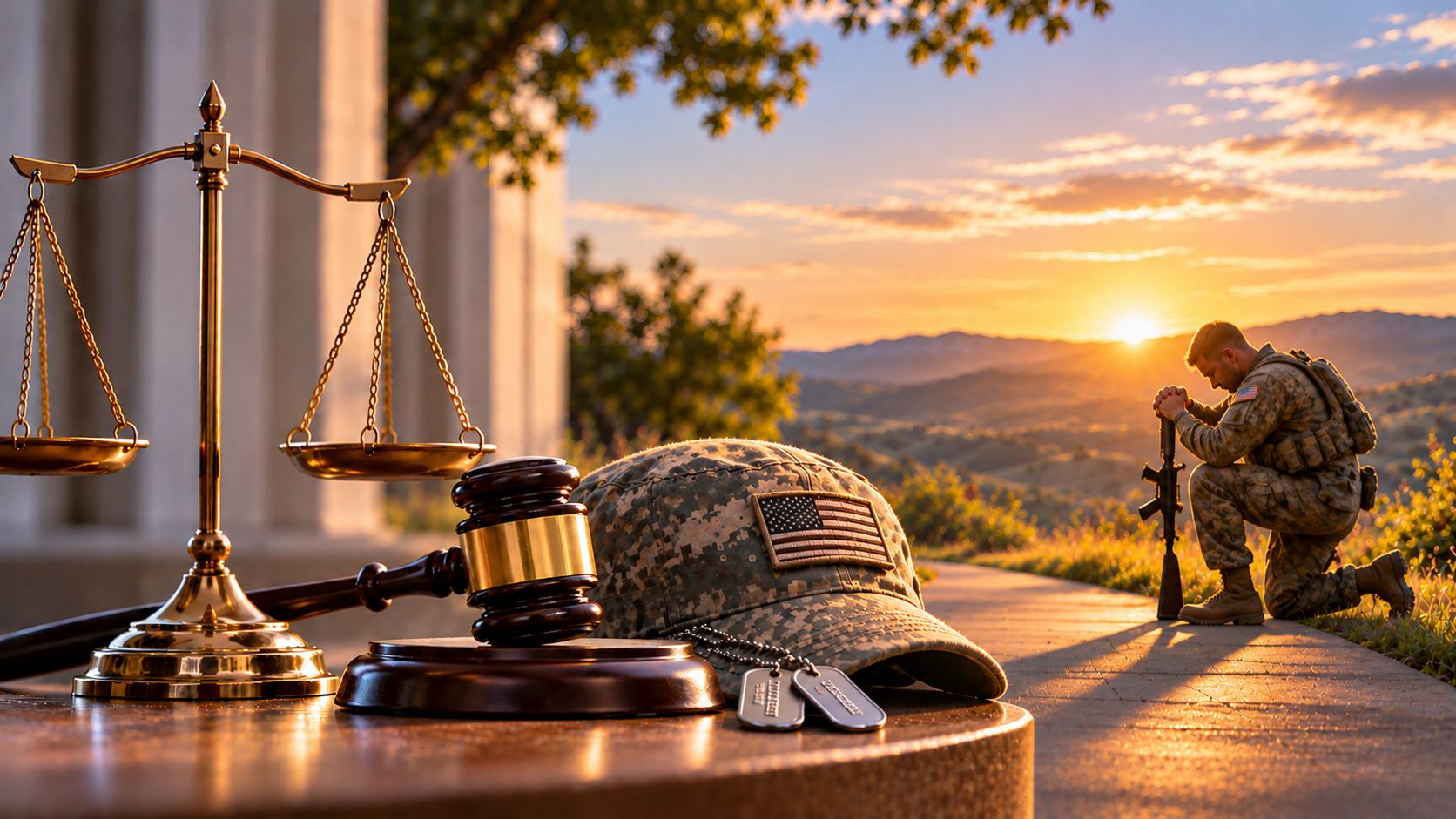
A defendant charged with a misdemeanor may be eligible for military diversion if:
The court may request an assessment to help determine whether the defendant meets these requirements.
Importantly, a defendant does not necessarily need a formal VA diagnosis before requesting military diversion. The court can consider appropriate evidence and may order or request an assessment using available resources.
A recent California Court of Appeal decision, Segura v. Superior Court, is particularly important. The court held that, for misdemeanor military diversion, the defendant does not have to establish a nexus between the military-related condition and the charged offense.
That can be especially significant in cases involving:
Military diversion can therefore be an important option even when the connection between military service and the particular incident is not immediately obvious.
California law changed significantly on January 1, 2025.
Senate Bill 1025 expanded Penal Code § 1001.80 to permit military diversion for certain felony offenses.
A defendant charged with a qualifying felony must:
This is a major difference between misdemeanor and felony military diversion.
The "Significant Factor" Requirement
For felony cases, the law creates an important presumption.
The court is required to find that the qualifying military-related condition was a significant factor in the commission of the offense unless there is clear and convincing evidence that the condition was not a motivating factor, causal factor, or contributing factor to the defendant's involvement in the alleged offense.
The court may consider many different types of evidence, including:
This makes the development of a strong factual record extremely important in a felony military-diversion case.


Eligibility and suitability are not necessarily the same thing.
Once the statutory eligibility requirements are satisfied, the court has discretion concerning whether the defendant should actually be placed into diversion.
The defendant must consent to diversion and waive the right to a speedy trial.
The court then establishes a treatment and rehabilitation plan appropriate to the defendant's circumstances.
Treatment may include:
The law directs courts to consider treatment programs with demonstrated experience treating veterans suffering from conditions such as PTSD, TBI, military sexual trauma, substance abuse, and related mental-health conditions. Preference may be given to appropriate programs operated by the Department of Veterans Affairs or Department of Defense.
The length of a military diversion program depends upon the individual case and the treatment plan established by the court.
Military diversion is not simply a requirement to "stay out of trouble." The purpose of the program is to address the underlying condition that contributed to the defendant's involvement with the criminal justice system.
A successful participant may be required to:
Veterans Treatment Courts may operate somewhat differently from a traditional military-diversion case. Program length and requirements can vary by county. For example, California courts report Veterans Treatment Court programs with programs commonly lasting approximately 15–18 months, although individual county requirements differ.
Successful completion can result in dismissal of the criminal charges.
This is one of the most significant benefits of military diversion.
Instead of receiving a criminal conviction, the defendant has the opportunity to address the underlying military-related condition and have the criminal case dismissed upon successful completion.
The goal is to allow the veteran or service member to move forward without the consequences associated with a criminal conviction.
Military diversion is not automatic immunity from prosecution.
If the defendant fails to comply with the treatment plan or other conditions of diversion, the court can take action concerning the violation and may terminate diversion.
If diversion is terminated, the criminal prosecution can resume.
For that reason, anyone placed on military diversion should take the treatment requirements and court orders very seriously.
Military diversion can be particularly important in DUI cases involving veterans and active-duty service members.
California law specifically recognizes military diversion for misdemeanor DUI cases. The history of the statute is important because California courts previously disagreed about whether DUI charges could be diverted. The Legislature subsequently amended the law to make clear that military diversion is available for misdemeanor DUI offenses.
More recently, the California Court of Appeal in Segura v. Superior Court addressed a veteran charged with misdemeanor DUI offenses who alleged alcohol abuse related to military service.
The court held that a defendant seeking misdemeanor military diversion does not have to establish a military-service nexus between the qualifying condition and the particular offense.
This is an important point for veterans facing DUI charges.
It means that an eligible veteran should not automatically assume that military diversion is unavailable simply because the prosecution disputes whether the DUI itself was caused by military service.
There is an important firearm consideration for anyone entering military diversion.
Effective January 1, 2026, California courts have a specific process for firearm and other prohibited-item orders in military and mental-health diversion cases.
Under Penal Code § 1001.80(p), the prosecution may request an order prohibiting a defendant from controlling, owning, purchasing, possessing, or receiving a firearm during diversion.
The prosecution has the burden of proving by clear and convincing evidence that:
If the statutory requirements are met, the firearm prohibition can remain in effect until the defendant successfully completes diversion or otherwise has firearm rights restored under applicable law.
This issue is particularly important for veterans, active-duty service members, hunters, competitive shooters, and anyone whose employment or military duties involve firearms.
Military diversion and Veterans Treatment Court are related but are not necessarily the same program.
Military Diversion
Military diversion under Penal Code § 1001.80 is a statutory pretrial diversion program.
It can be available before a defendant enters a conviction and can ultimately result in dismissal of the charges.
Veterans Treatment Court
Veterans Treatment Court is a specialized collaborative court designed to address the needs of veterans involved in the criminal justice system.
The structure and eligibility requirements vary from county to county.
Veterans Treatment Courts may involve:
California currently has Veterans Treatment Courts in numerous counties, but the availability and requirements vary by jurisdiction.
A veteran should therefore have an attorney determine whether the case is best handled through Penal Code § 1001.80 military diversion, Veterans Treatment Court, another diversion statute, or a combination of available services.
Military diversion should generally be addressed as early in the criminal case as possible.
An attorney can:
The California Judicial Council also provides a MIL-100 Notification of Military Status form that can be used to notify the court of a person's military status. California courts specifically encourage veterans and service members to make their military status known because it can affect available programs and protections.
For a veteran or service member facing criminal charges, the question should not always be simply:
"How do I fight this charge?"
A more comprehensive approach is:
"Why did this happen, and is there a treatment-based way to resolve the case without a conviction?"
Military diversion gives the court an opportunity to address conditions such as PTSD, traumatic brain injury, military sexual trauma, substance abuse, and mental-health problems that may be associated with a veteran's involvement in the criminal justice system.
For an eligible defendant, successful completion can mean:
If you are a veteran or active-duty service member facing criminal charges, do not assume that a conviction is the only option. Military diversion should be evaluated before the case is resolved by plea or trial.
As successful Criminal Defense Attorneys in Chico, we frequently serve Butte, Glenn and Tehama County.
We will defend your Chico DUI, Butte County criminal case, felony charge or probation violation.

© Copyrights 2018 - 2026 | Nor Cal Criminal Law